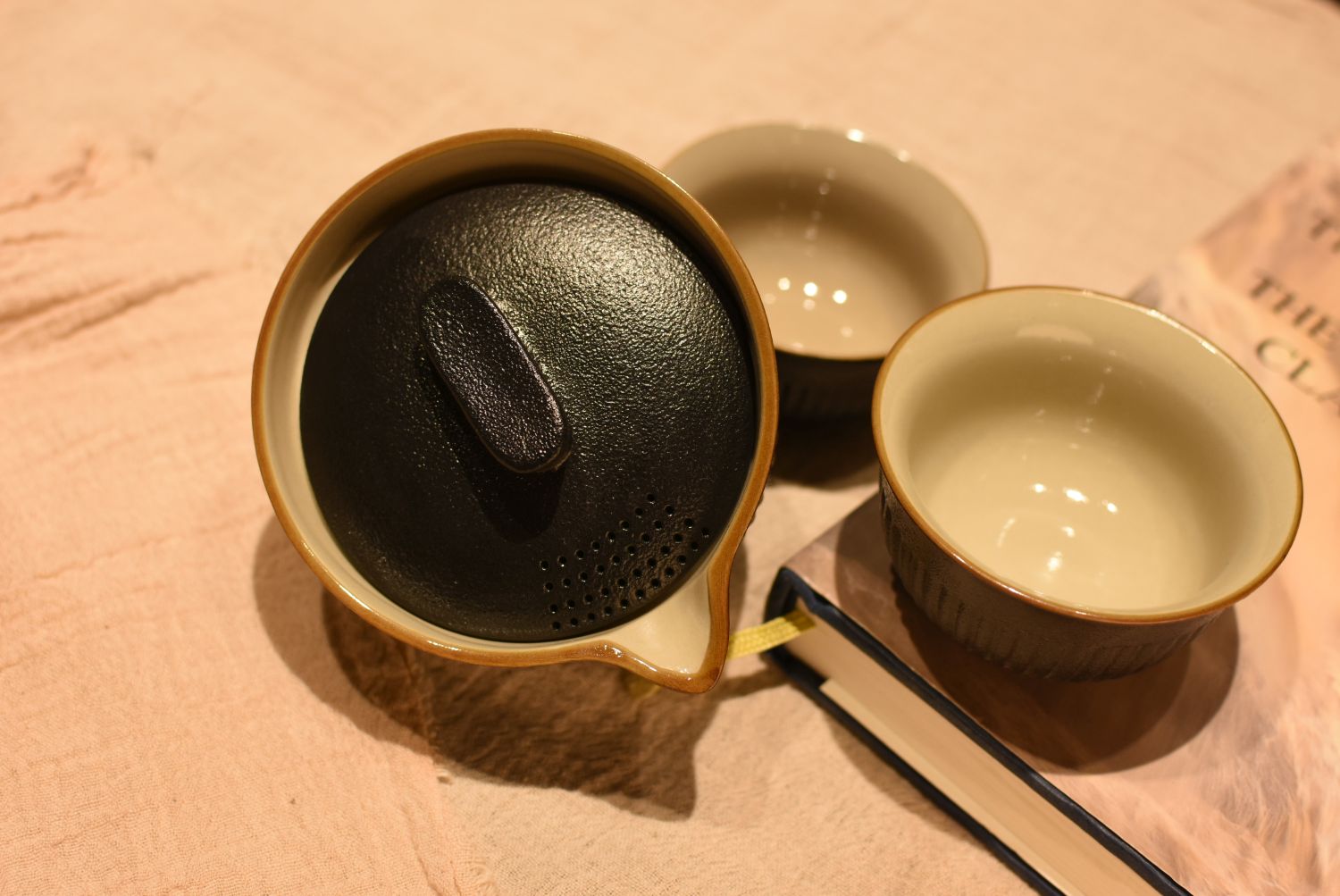
Success with Light Spirit – Jianshui Teapot | Black Clay with Traditional Inlay Technique 110 ml.
$31.01
$45.89
Beschreibung STYLE A small, rounded Xishi teapot featuring a good wish in decoration and a calligraphy. Chinese decorative art often brings together visual motifs that collectively express a good wish, creating a composition with layered and nuanced meaning. On this teapot, a peony (wealth and prosperity), a persimmon (success), and a dragonfly (lightness and swiftness) appear. Together they form a single auspicious message: may your life be rich, successful with light spirit (without efforts)! The calligraphy means from right to left: Delight and simplicity 清, Cultivated taste 趣, Leasure interest 名 and the read stamp for the fortune: 吉. The Xishi teapot is the most famous teapot shape, originally modeled after the breast of a famous concubine . Xu Youquan (17th century) worked based on old copper and bronze sacrificial vessels, and he also created many natural forms inspired by flowers, bamboo, melons, elephants, and other natural phenomena. His most famous creation is the Xishi shape, which evokes the curves and charm of Xi Shi, a Chinese beauty ideal who lived in the 6th century BCE. Since then, it has become the most frequently made and beloved Yixing teapot shape worldwide. Jianshui ist eine der vier berühmten Keramikstädte Chinas, vor allem wegen der künstlerischen Verarbeitung farbiger Tone aus den örtlichen Tonminen und des damit verbundenen Keramikhandwerks sowie des Yixing. Die Stadt liegt in Yunnan, nicht weit von Kunming entfernt. Die Jianshui-Töpfe, die robuster sind als die Yixing-Töpfe, werden auf einer Töpferscheibe gedreht. Die unglasierten Kannen, die außen hell glänzen, sind "atmende" Teegefäße mit hoher Wärmespeicherung. Ihre Farbe ist in der Regel auberginenschwarz oder rostbraun, sie können aber auch hellgrau oder gelb sein. Diese Gefäße im antiken Stil sind "hart wie Eisen, glänzend wie Wasser, seidig wie Jade, klirrend wie ein Stein". MATERIAL Jianshui Zitao ABMESSUNGEN Fassungsvermögen: 110 ml. USAGEChinese decorative art often brings together visual motifs that collectively express a good wish, creating a composition with layered and nuanced meaning. Sheng puer, Grüner Oolong, Chinesischer Grüner Tee, Weißer Tee SIGNATUR/KÜNSTLER Wang Chou (1977), 2025 PROVENIENZ From the Tea Bar ZUSTAND Neu